Hey there, I’m Jake, and I’ve spent the last eight years selling diaphragm pumps to industries that need reliable, low-maintenance fluid handling—things like chemical processing, agricultural irrigation, and municipal water treatment. A question comes up at least twice a month when I’m chatting with potential customers, contractors, and even fire safety inspectors: Can a diaphragm pump work for firefighting? Diaphragm Pump

It’s not a yes/no answer, and if I’m being honest, a lot of folks in the fire industry have a default “no” because they’re used to engine-driven centrifugal pumps, which have been the go-to for fire trucks and structural firefighting for decades. But after working with a few industrial fire teams and testing diaphragm pumps in real-world emergency scenarios, I’m here to break this down, explain where diaphragm pumps shine (and where they might not be the first pick), and show why they’re worth considering for specific firefighting applications.
First, let’s cut through the jargon for anyone who might not be super familiar with diaphragm pumps. Unlike centrifugal pumps, which use a spinning impeller to fling water out, diaphragm pumps work on a simple, sealed principle: a flexible rubber or thermoplastic diaphragm expands and contracts in a chamber. When it pulls back, it creates suction that draws fluid in through a one-way inlet valve; when it pushes forward, it forces the fluid out through a one-way outlet valve. That seal is non-negotiable—nothing in the pump’s wet side touches the fluid, which is a huge detail for a lot of reasons.
Now, let’s talk about what fire applications actually need. Firefighting fluid handling falls into two broad categories: structural firefighting (think house fires, office blazes) which needs high flow rates and high pressure to push water up multiple floors, and non-structural fire scenarios (brush fires, industrial tank fires, confined space fires, or even things like pipe leaks that need immediate containment) where flexibility, durability, and adaptability matter more than raw 1,500-psi pressure.
Let’s start with the big win: diaphragm pumps are already being used in more firefighting roles than most people realize. Take wildland firefighting, for example. Those teams often fight brush fires in remote areas where engine access is limited. A lot of wildland fire crews carry portable pump units, and I’ve seen our diaphragm pumps deployed on skid units attached to ATVs, UTVs, and even hand-pulled carts here in the Pacific Northwest. Why? Two big reasons: they’re self-priming, and they handle sediment way better than centrifugal pumps.
Centrifugal pumps need to be primed, and if you’re drafting water from a muddy creek or a stagnant pond, sediment can clog the impeller in minutes. Diaphragm pumps don’t have an impeller—their only moving parts are the diaphragm and the check valves, which are easy to clean in the field. I worked with a crew out of eastern Washington last summer who used our 2-inch air-operated diaphragm pump to draft water from a seasonal pond full of pine needles and silt; they ran it for 45 minutes straight, no clogging, no pressure drop. That’s a game-changer when you’re miles from the nearest hydrant.
Then there’s the seal advantage. A lot of industrial fires involve hazardous fluids—chemical storage tank blazes, petroleum spills, electrical fires where water is a bad fit but foam or specialized suppression agents are needed. Diaphragm pumps are fully sealed, so there’s zero risk of fluid leaking back into the pump, which is critical for containing toxic runoff. Last year, we supplied a pump to a chemical plant that had a small propane tank fire in a secondary containment area. The crew used our diaphragm pump to inject foam concentrate into the water stream, and because the pump’s wet side never mixed the foam with the mechanical parts, they didn’t have to flush the system after—saved them hours of cleanup and downtime. They still use that same pump for routine foam testing now.
Air-operated diaphragm pumps (the kind we sell most of) also run on compressed air, which means they don’t need electricity or a gas engine. For confined space fires—like a fire in a basement utility closet, a mine entrance, or a shipping container fire—gas engine fumes are a hazard. They displace oxygen, which can kill anyone inside, and they’re a spark risk. An air-operated diaphragm pump has no ignition source, so it’s safe to run in low-oxygen, explosive atmosphere environments. A team out of Oregon tested this last fall: they ran a 1-inch air diaphragm pump off a portable air compressor in a basement during a small electrical fire, and it moved 12 gallons per minute of water without any fumes or sparks. That’s a safety benefit centrifugal pumps can’t touch.
But let’s be honest—diaphragm pumps aren’t perfect for every firefighting job. If you’re fighting a three-alarm structure fire, you need pressure to push water up three flights of stairs, and centrifugal pumps are still the better pick for high flow and high pressure (our standard diaphragm pumps top out around 100 psi, though we do offer high-pressure models that can go up to 200 psi; that’s enough for smaller structures but not skyscrapers). Flow rates also top out around 150 gallons per minute for most commercial diaphragm pumps, which is fine for small brush fires or confined space jobs, but not enough to douse a large warehouse fire.
Another consideration: diaphragm lifespan. The diaphragm is the only wearable part of the pump, and how often you need to replace it depends on what you’re pumping. If you’re moving clean water, a diaphragm can last 500–1,000 hours; if you’re moving abrasive silt or foam, you might need to replace it every 100–200 hours. That’s not a big deal for routine use, but during a big fire, you can’t afford unexpected downtime. Centrifugal pumps have fewer wear parts (impeller, seal, shaft) that last longer under heavy use, so they’re more reliable for extended, high-demand structural fires.
I also want to address a common myth: diaphragm pumps can’t handle high temperatures. Our pumps are made with thermoplastic diaphragms that can handle fluids up to 180°F, and rubber diaphragms go up to 200°F. That’s perfect for most firefighting scenarios—even if you’re pumping water heated by a nearby blaze, you’re not going to get fluid that hot. If you were pumping steam, that’s a different story, but that’s not a standard firefighting need.
So who should actually use a diaphragm pump for firefighting? Let’s make a clear list:
- Wildland and rural brush fires, where remote access and sediment handling are key
- Industrial fire suppression, especially for hazardous fluids where seal integrity is critical
- Confined space fires, where gas engine fumes or sparks are a hazard
- Emergency pump backup for hydrant failures, when you need to draft from a local water source fast
- Foam or specialized agent injection systems, since the sealed design prevents cross-contamination with mechanical parts
If your team is only fighting structural fires in cities, stick with centrifugal pumps. But if you’re handling a mix of fire scenarios—rural, industrial, confined space—a diaphragm pump is a solid addition to your fleet.
We’ve also worked with a few fire departments that use diaphragm pumps as portable backup units. Their standard trucks have centrifugal pumps, but they carry a small air diaphragm pump in the cab to use if the main pump fails or a hydrant is empty. It’s lightweight (our 2-inch pump weighs just 35 pounds), easy to set up, and takes 90 seconds to prime, which is way faster than hauling out a backup centrifugal pump.
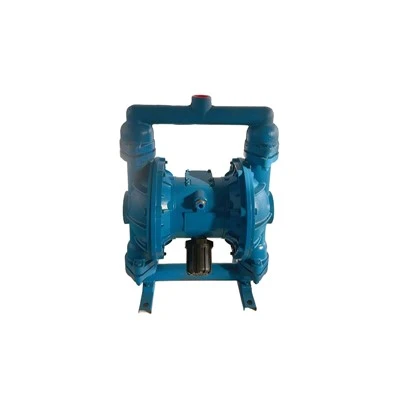
Now, I get it—change is hard in the fire industry. You’ve got systems that have worked for 50 years, and it’s easy to write off diaphragm pumps as a “new fad.” But after seeing these pumps in action, I can tell you they’re not a fad—they’re a practical solution for gaps that centrifugal pumps can’t fill. They’re durable, safe, and adapt to the messy, unpredictable environments firefighters work in every day.
Gear Pump If you’re a fire chief, equipment manager, or fire safety contractor who’s curious about testing a diaphragm pump, or you just want to talk through how it might fit your team’s needs, I’m here. We’ve supplied pumps to fire departments across the U.S. for over a decade, and we’re happy to answer questions, provide test data, or work with your team to build a custom skid unit for your fleet. We don’t push one-size-fits-all solutions, but we do know diaphragm pumps work for a lot of firefighting jobs, and that’s what matters most—getting reliable, safe equipment to the people who need it.
References
- Fire Equipment Manufacturers Association. (2022). Portable Pump Standards for Wildland and Structural Firefighting. National Fire Protection Association.
- Fluid Power Society. (2021). Diaphragm Pump Sealing Technology for Hazardous Fluid Handling. Journal of Industrial Fluid Systems.
- U.S. Department of Agriculture Forest Service. (2020). Portable Pump Performance in Sediment-Laden Water Sources. Wildland Fire Operations Report.
- Occupational Safety and Health Administration. (2019). Spark-Free Pump Equipment for Confined Space Firefighting. Safety Standards for Emergency Response.
Botou Hengyang Pump & Valve Co., Ltd.
With abundant experience, we are one of the most professional diaphragm pump manufacturers and suppliers in China. Please feel free to buy high standard diaphragm pump made in China here and get pricelist from our factory. All customized pumps are with high quality and competitive price.
Address: No. 159, Road 1, Development Zone, Botou City, Cangzhou, Hebei Province, China
E-mail: bthdbf@163.com
WebSite: https://www.hyoilp.com/
