Hey there! I’m a supplier of spirally wound stainless steel tubes, and today I wanna chat about the magnetic property of these nifty tubes. You might be wondering why on earth the magnetic property matters. Well, it has a whole bunch of implications in different industries, and understanding it can help you make better decisions when you’re looking to buy these tubes. Spirally Wound Stainless Steel Tube

First off, let’s talk a bit about what makes a spirally wound stainless steel tube. These tubes are made by winding a long strip of stainless – steel in a spiral pattern. The unique way of manufacturing gives them great strength and durability. But what about their magnetic property?
Not all stainless – steel is magnetic, and that’s an important thing to note. The magnetism of stainless steel mainly depends on its microstructure and alloy composition. There are different types of stainless steel, and the most common ones are austenitic, ferritic, and martensitic.
Austenitic stainless steel is usually non – magnetic. This type of stainless steel is known for its high corrosion resistance and formability. It has a face – centered cubic (FCC) crystal structure at room temperature. The austenitic structure is stable, and the electrons in the atoms are arranged in such a way that they cancel out each other’s magnetic fields. So, if you take a magnet to an austenitic spirally wound stainless steel tube, chances are it won’t stick.
On the other hand, ferritic and martensitic stainless steels are magnetic. Ferritic stainless steel has a body – centered cubic (BCC) crystal structure. Its atoms are arranged in a way that creates a net magnetic moment. This means that a magnet will be attracted to a ferritic spirally wound stainless steel tube. Martensitic stainless steel is similar to ferritic, but it has a different heat – treatment process that gives it a more complex structure. It’s also magnetic, but its magnetic properties can vary depending on the exact alloy and the heat – treatment it has undergone.
Now, you might ask, "Why does it matter if the tube is magnetic or not?" Well, there are several reasons. In the food and beverage industry, for example, non – magnetic austenitic stainless steel tubes are often preferred. This is because they are highly resistant to corrosion, which is crucial when dealing with food and drinks. Also, non – magnetic materials won’t attract metal particles, which could contaminate the product.
In the electronics industry, the magnetic property can also play a big role. Non – magnetic tubes are used in applications where magnetic interference needs to be avoided. For instance, in some electronic devices, magnetic fields can disrupt the normal operation of the components. So, using non – magnetic spirally wound stainless steel tubes can help prevent such interference.
In contrast, magnetic tubes have their own uses. In the automotive industry, magnetic stainless steel tubes can be used in sensors and actuators. These components rely on magnetic fields to function properly, so the magnetic property of the tube is actually an advantage.
As a supplier of spirally wound stainless steel tubes, I get a lot of questions from customers about the magnetic property. Some customers specifically ask for non – magnetic tubes, while others need magnetic ones. That’s why we offer a wide range of options. We have a team of experts who can help you choose the right type of tube based on your specific needs.
When you’re looking to buy spirally wound stainless steel tubes, it’s important to know how to test the magnetic property. A simple way is to use a small magnet. Just bring the magnet close to the tube and see if it sticks. However, this is just a basic test. For more accurate results, especially in industrial applications, you might need to use more advanced testing methods, like magnetic susceptibility measurements.
Another thing to consider is that the magnetic property of a spirally wound stainless steel tube can be affected by factors like cold working. Cold working is a process where the tube is deformed at room temperature. This can change the microstructure of the stainless steel and sometimes make a non – magnetic austenitic tube slightly magnetic. So, if you have strict requirements regarding the magnetic property, make sure to discuss it with the supplier.
We take great pride in providing high – quality spirally wound stainless steel tubes. We source our raw materials from reliable suppliers and use advanced manufacturing techniques to ensure the best quality. Whether you need a non – magnetic tube for a food processing plant or a magnetic tube for an automotive application, we’ve got you covered.
If you’re in the market for spirally wound stainless steel tubes, don’t hesitate to reach out. We can have a detailed discussion about your needs, and our team will help you find the perfect solution. We’re here to make the purchasing process as smooth as possible for you.
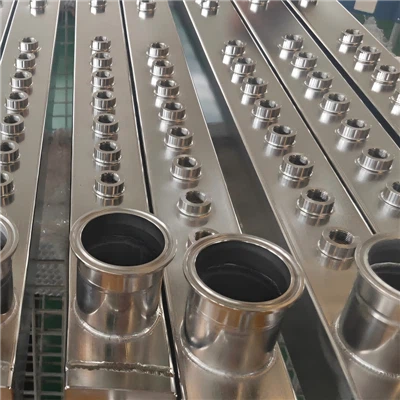
In conclusion, the magnetic property of a spirally wound stainless steel tube is an important characteristic that can have a big impact on its applications. Understanding the different types of stainless steel and their magnetic properties can help you make an informed decision when buying these tubes. So, if you’re looking for a reliable supplier, give us a shout and let’s start the conversation.
Corrugated Stainless Steel Tube References:
- "Stainless Steels: A Practical Guide", ASM International
- "The Properties and Selection: Irons, Steels, and High – Performance Alloys", ASM Handbook Committee
China Super Tech Co., Ltd.
As one of the most professional spirally wound stainless steel tube manufacturers and suppliers in China, we’re featured by quality products and good service. Please rest assured to wholesale OEM spirally wound stainless steel tube from our factory. Also, custom service is available.
Address: Wangjing Science and Technology Park, Guangshun North Street, Chaoyang District, Beijing
E-mail: sales@316liquidcooling.com
WebSite: https://www.316liquidcooling.com/
