As a supplier of FRP (Fiber Reinforced Plastic) molds, I’ve had my fair share of experiences with different types of resins used in this industry. Resins are a crucial part of FRP molds, and understanding their properties can really make or break a project. So, let’s dive right in and talk about what makes these resins so special. FRP Mold

1. Chemical Resistance
One of the most important properties of the resin used in FRP molds is its chemical resistance. In a lot of industrial settings, FRP molds are exposed to all sorts of chemicals. Whether it’s acids, alkalis, or solvents, the resin needs to be able to stand up to them.
For example, in the chemical processing industry, where FRP tanks and pipes are widely used, the resin must resist corrosion from strong acids like sulfuric acid or hydrochloric acid. Polyester resins, especially isophthalic and terephthalic polyesters, are known for their decent chemical resistance. They can handle a variety of mild to moderately aggressive chemicals, making them a popular choice for many general – purpose FRP applications.
On the other hand, vinyl ester resins take it a step further. They have a higher cross – linking density compared to polyester resins, which gives them better resistance to more aggressive chemicals. They’re often used in applications where the FRP mold is going to be in contact with strong solvents or highly concentrated acids and alkalis. This makes them ideal for use in the petrochemical industry, where harsh chemicals are part of the daily operations.
2. Mechanical Properties
Mechanical properties are another key aspect when it comes to the resin used in FRP molds. We’re talking about things like strength, stiffness, and toughness.
Strength is crucial because FRP molds need to be able to withstand the forces applied during the molding process. Tensile strength, which is the ability of the material to resist pulling forces, is an important factor. For instance, when molding large parts, the resin needs to hold up under the stress of the weight of the composite material and any mechanical pressure applied.
E – glass fiber reinforced polyester or vinyl ester resins can offer good tensile strength. The fibers act as reinforcement, enhancing the overall strength of the resin matrix. In applications where high strength is required, such as in the aerospace or automotive industries, carbon fiber reinforced resins are often used. Carbon fibers have a very high tensile strength, and when combined with a suitable resin, they can create extremely strong FRP molds.
Stiffness, or the modulus of elasticity, is also important. It determines how much a material will deform under a given load. A more rigid resin is preferred in applications where dimensional stability is crucial. For example, in the manufacture of precision parts, a resin with high stiffness will help ensure that the final product has the correct shape and size.
Toughness is the ability of the resin to absorb energy and resist fracture. A tough resin is less likely to crack or break under impact. This is important in applications where the FRP mold may be subject to accidental bumps or shocks during handling or operation.
3. Thermal Properties
Thermal properties play a significant role, especially in industries where the FRP molds are exposed to high or low temperatures.
Heat resistance is a major concern in many applications. For example, in the manufacturing of automotive parts using FRP molds, the molding process may involve high temperatures. The resin needs to be able to maintain its structural integrity at these elevated temperatures. Phenolic resins are well – known for their excellent heat resistance. They can withstand very high temperatures without significant degradation, making them suitable for applications like brake components in vehicles.
On the other hand, thermal expansion is also something to consider. A resin with a low coefficient of thermal expansion will change its dimensions less with temperature variations. This is important for maintaining the accuracy of the mold in different temperature environments. If a resin expands or contracts too much with temperature changes, it can lead to dimensional inaccuracies in the final molded part.
4. Curing Properties
The curing process of the resin is also a defining characteristic. Curing is the process by which the resin changes from a liquid to a solid state.
There are different types of curing mechanisms. For example, polyester resins can be cured through a free – radical polymerization process, usually initiated by a catalyst. The curing time can vary depending on the type of resin, the amount of catalyst used, and the temperature. A faster curing time can be an advantage in some production processes, as it allows for quicker turnaround times between moldings. However, it also needs to be balanced with the need for proper mixing and handling of the resin before it cures.
Epoxy resins, on the other hand, cure through a chemical reaction between the resin and a hardener. Epoxy resins often offer better mechanical properties compared to polyester resins, but they can be more expensive and have a longer curing time. The curing process of epoxy resins can also be more sensitive to temperature and humidity conditions.
5. Adhesion Properties
Good adhesion is essential for the resin in FRP molds. The resin needs to adhere well to the reinforcing fibers, such as glass or carbon fibers, to form a strong composite. It also needs to adhere to any release agents or coatings used on the mold surface.
If the resin doesn’t adhere properly to the fibers, the overall strength and performance of the FRP part will be compromised. The fibers won’t be able to transfer the load effectively to the resin matrix, leading to a weaker composite.
In addition, proper adhesion to the mold surface is important for a smooth demolding process. If the resin sticks too strongly to the mold, it can damage the mold or the molded part during demolding. On the other hand, if the adhesion is too weak, the resin may not form a good bond with the mold, resulting in surface defects on the molded part.
Why Choose Our Resins for Your FRP Molds
As an FRP mold supplier, we’ve carefully selected the resins we use based on their properties. We understand that different projects have different requirements, and we’ve got a range of resins to meet those needs.
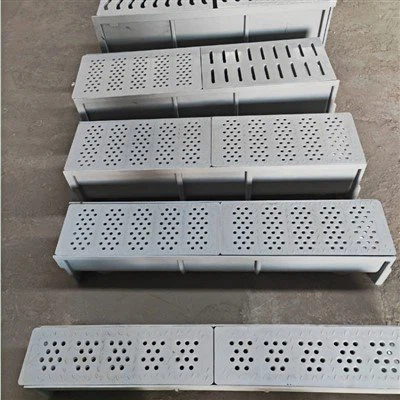
Whether you’re looking for a resin with high chemical resistance for a chemical processing application or a high – strength resin for an aerospace project, we can offer the right solution. We have a team of experts who can help you choose the most suitable resin for your specific needs.
FRP Tanks If you’re in the market for FRP molds and want to learn more about the resins we use or discuss your project, feel free to get in touch. We’re always happy to have a chat, answer your questions, and start a conversation about how we can work together to meet your FRP mold needs.
References
- "Handbook of Polymer Science and Technology”
- “Composite Materials: Design and Applications”
- “Resin Technology for Fiber – Reinforced Plastics”
Hebei Weihan Environmental Protection Equipment Co., Ltd.
We’re well-known as one of the leading FRP mold manufacturers and suppliers in China, featured by quality products and good service. Please rest assured to buy customized FRP mold at competitive price from our factory. Contact us for more details.
Address: No. 666 Chuangye Road, Zaoqiang County, Hengshui City, Hebei Province
E-mail: weihanmachine@gmail.com
WebSite: https://www.whanfrp.com/
