Hey there, folks! I’m a supplier of Flat Litz Wire, and today I wanna chat about the markings on Flat Litz Wire. You might be wondering what those little marks are all about. Well, they’re actually super important, and I’ll break it all down for you. Flat Litz Wire
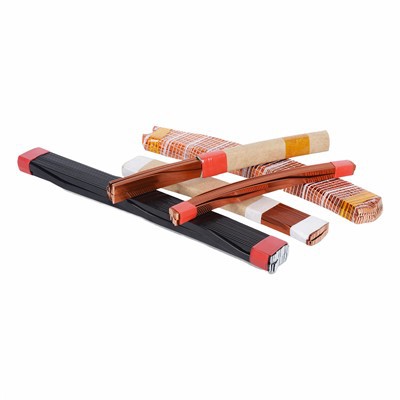
First off, let’s talk about why we even have markings on Flat Litz Wire. These markings serve a few key purposes. For starters, they help with identification. You see, in a big production facility or when you’re working on a complex project, it can be really easy to mix up different types of wires. The markings make it clear which wire is which, so you don’t end up using the wrong one.
One of the most common markings you’ll see on Flat Litz Wire is the gauge. The gauge tells you the thickness of the wire. It’s like a sizing system. A lower gauge number means a thicker wire, while a higher gauge number means a thinner wire. For example, a 10-gauge Flat Litz Wire is going to be thicker than a 20-gauge one. This is crucial because the gauge affects the wire’s electrical properties. Thicker wires can generally carry more current without overheating, so if you’re working on a project that requires a lot of power, you’ll need a lower-gauge wire.
Another important marking is the number of strands. Flat Litz Wire is made up of multiple small strands of wire bundled together. The number of strands can vary widely depending on the application. More strands mean more surface area, which can improve the wire’s conductivity and flexibility. For instance, if you’re making a high-frequency transformer, you might want a Flat Litz Wire with a large number of strands to reduce the skin effect. The skin effect is a phenomenon where, at high frequencies, the current tends to flow on the surface of the wire rather than through the whole cross-section. By having more strands, you increase the overall surface area, which helps the current flow more evenly and reduces losses.
You’ll also often find markings indicating the type of insulation on the wire. Insulation is super important because it protects the wire from short circuits and keeps it safe to handle. There are different types of insulation materials, each with its own properties. Some are better at withstanding high temperatures, while others are more resistant to chemicals or moisture. For example, if you’re using the wire in a harsh environment where it might be exposed to chemicals, you’ll want an insulation material that can resist those chemicals.
The color of the insulation can also be a form of marking. Different colors can be used to indicate different functions or phases. In a three-phase electrical system, for example, you might use different colors of Flat Litz Wire to represent each phase. This makes it easier to install and troubleshoot the system.
Now, let’s talk about how these markings are applied. There are a few different methods. One common way is to print the markings directly onto the insulation. This can be done using special inks that are designed to adhere to the insulation material. The printing process is usually automated, so it’s fast and accurate. Another method is to use embossing or debossing. This involves creating raised or indented markings on the surface of the insulation. Embossed or debossed markings can be more durable than printed ones, especially in harsh environments where the wire might be subject to abrasion or chemical exposure.
As a supplier, I know how important it is to get these markings right. That’s why we have strict quality control measures in place. We make sure that the markings are clear, accurate, and durable. We also offer custom markings if you have specific requirements for your project. For example, if you need your company logo or a unique part number on the wire, we can do that for you.
So, if you’re in the market for Flat Litz Wire, you now know what to look for when it comes to the markings. Whether you’re an electrical engineer working on a high-tech project, a hobbyist building your own gadgets, or a manufacturer looking for a reliable wire supplier, choosing the right Flat Litz Wire with the appropriate markings is crucial.
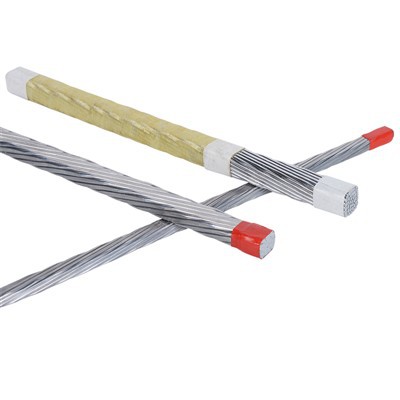
If you’re interested in buying Flat Litz Wire for your project, don’t hesitate to reach out. We’ve got a wide range of options available, and our team of experts can help you find the perfect wire for your needs. Whether you need a specific gauge, number of strands, or type of insulation, we’ve got you covered. We’re committed to providing high-quality products and excellent customer service. So, take the next step and contact us for a quote. Let’s work together to make your project a success!
Wrapped Wire References
- Electrical Engineering Handbook by Richard C. Dorf
- Handbook of Electrical Insulating Materials by J. P. Harrold
Tianjin Jingwei Power Technology Co., Ltd.
As one of the most professional flat litz wire manufacturers and suppliers in China, we’re featured by quality products and good service. Please rest assured to buy durable flat litz wire made in China here from our factory. Contact us for more details.
Address: No.1 Chuangxin Rd. Xiaozhan Industrial Park, Jinnan District, Tianjin, China
E-mail: info@jwdc.cn
WebSite: https://www.jw-dcs.com/
