Hey there! I’m a supplier in the construction machinery field, and I’ve been dealing with all sorts of construction equipment for years. One big issue that always comes up in this industry is vibration control for construction machinery. You know, excessive vibration can mess things up big time, not just for the machinery itself but also for the operators and the overall construction quality. So, today I wanna share with you some of the vibration control measures we often use. Construction Machinery
First off, let’s talk about why vibration control is so important. When construction machinery vibrates too much, it can cause a bunch of problems. For the machinery, it can lead to premature wear and tear of parts. The constant shaking can loosen bolts and nuts, damage bearings, and even crack the frame. This means more maintenance work and higher costs for the users. And for the operators, long – term exposure to high – level vibration can cause health issues like hand – arm vibration syndrome or whole – body vibration – related problems. It can also affect their ability to operate the machinery precisely, which is super crucial on a construction site.
Alright, now let’s dive into the vibration control measures.
Damping Devices
One of the most common ways to control vibration is by using damping devices. These are like little shock absorbers that soak up the vibration energy. In simple terms, when the machinery starts to vibrate, the damping device turns that kinetic energy of vibration into heat energy, which then dissipates.
There are different types of damping devices. For example, hydraulic dampers are widely used. They work based on the principle of fluid resistance. Inside the damper, there’s hydraulic fluid. When the machinery vibrates, the movement of parts causes the hydraulic fluid to flow through small orifices, creating resistance. This resistance slows down the vibration and reduces its intensity.
Another type is rubber dampers. Rubber has good elastic properties and can absorb a lot of vibration energy. We often use rubber mounts between different parts of the machinery, like between the engine and the frame. The rubber can distort when it encounters vibration, and this distortion helps to reduce the transmission of vibration from one part to another. For instance, in a concrete mixer truck, rubber mounts are used to isolate the vibration of the engine from the rest of the vehicle body, making the driving experience more comfortable and reducing the risk of damage to other components.
Balancing
Balancing is another key measure. Unbalanced parts in construction machinery can be a major source of vibration. For example, in a rotating machine like a pump or a generator, if the rotor is not balanced properly, it will create uneven forces as it spins, leading to vibration.
To achieve balance, we use various techniques. Dynamic balancing is a common one. In this process, we use special equipment to measure the amount and location of the imbalance in a rotating part. Then, we either add or remove weight at specific points to correct the imbalance. This is usually done in a factory setting during the manufacturing process, but it can also be done during maintenance. For a large excavator’s engine flywheel, if it’s unbalanced, it can cause the whole engine to vibrate, affecting the performance of the excavator. By performing dynamic balancing on the flywheel, we can significantly reduce the vibration level.
Isolation
Vibration isolation is all about preventing the vibration from spreading from the source to other parts of the machinery or to the operator. We use isolation materials and structures to achieve this.
Isolation pads are a simple yet effective solution. These pads are usually made of materials like rubber or foam. They are placed under the machinery or between the machinery and its supporting structure. The isolation pads act as a buffer, absorbing and reducing the amount of vibration that is transmitted to the ground or other connected parts. For example, in a small portable concrete breaker, an isolation pad is placed between the breaker and the user’s hand – held handle. This reduces the vibration felt by the operator, making it more comfortable and safer to use.
We also use isolation mounts in larger machinery. These mounts are designed to support the machinery while isolating the vibration. They can be adjusted to provide different levels of isolation depending on the specific requirements of the machinery. In a large tower crane, isolation mounts are used to minimize the vibration transmitted from the moving parts of the crane to the tower structure, which helps to ensure the stability and safety of the whole crane system.
Design Optimization
Good design is often the foundation of effective vibration control. When designing construction machinery, we take vibration into account right from the start.
We choose the right materials and structural shapes. For example, using materials with high stiffness and low mass can help reduce vibration. In the design of a construction vehicle’s chassis, we select materials that are strong enough to withstand the loads but also light enough to reduce the inertia that can contribute to vibration.
The layout of components also matters. We try to arrange the parts in a way that minimizes the interaction that can cause vibration. In a bulldozer, for example, we carefully position the engine, transmission, and other major components to ensure that the vibration generated by each part doesn’t amplify due to the proximity or the way they are connected.
Moreover, we can also use computer – aided design (CAD) and simulation software to model and analyze the vibration characteristics of the machinery during the design phase. This allows us to identify potential vibration problems early and make adjustments to the design before the machinery is actually built.
Operator Training
Operator training is often overlooked when it comes to vibration control, but it’s actually very important. A well – trained operator can operate the machinery in a way that reduces vibration.
For example, operators should be trained to start and stop the machinery smoothly. Sudden starts and stops can cause large – amplitude vibrations. They should also avoid overloading the machinery. Overloading can put extra stress on the components, leading to increased vibration.
In addition, operators should be aware of the importance of regular maintenance. They should check for loose parts, worn – out components, and other issues that can contribute to vibration. By reporting these problems in a timely manner, they can help prevent the vibration from getting worse.
Now, if you’re in the market for construction machinery that has effective vibration control, you’ve come to the right place. I can offer you a wide range of high – quality construction equipment that has been designed and equipped with the latest vibration control measures. Whether you need excavators, loaders, or concrete mixers, I’ve got you covered. The vibration control technology in our machinery not only enhances the durability and reliability of the equipment but also provides a more comfortable and safe working environment for the operators.
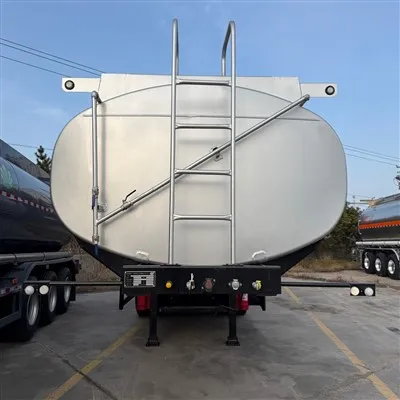
Tank Trailer If you’re interested in our products, don’t hesitate to reach out to me. We can have a detailed discussion about your specific needs, and I’ll be more than happy to help you choose the right construction machinery for your projects.
References
- "Handbook of Vibration in Construction Machinery", Publisher: ABC Publishing, Year: 20XX
- "Principles of Machine Design for Vibration Reduction", Author: John Smith, Journal: Engineering Design Journal, Volume: XX, Issue: XX, Year: 20XX
- "Operator Training and Vibration Management in Construction", Research Paper, Institution: Construction Research Institute, Year: 20XX
Shandong Huayuanda Automobile Manufacturing Co., Ltd.
As one of the most experienced construction machinery manufacturers and suppliers in China, our products have good reputation in the market. We warmly welcome you to buy high quality construction machinery at low price from our factory. If you have any enquiry about cooperation, please feel free to email us.
Address: Industrial Park, Quanpu Town, Liangshan County, Jining City, Shandong Province
E-mail: Huayuanda2024@163.com
WebSite: https://www.hydtrailer.com/
