If you’ve ever walked the floor of a medical device plant, an automotive component shop, or a consumer electronics factory during the middle of a production run, you’ll know high speed injection molding isn’t just about speed. It’s about precision that doesn’t waver, cycle times that stay consistent hour after hour, and the ability to turn thousands of tiny, complex parts without a single defect. That’s why, when a manufacturing customer comes to us needing a new high speed injection molding machine (HIMM), the last thing we do is push them to pick a model and sign. We start with a rigorous, item-by-item inspection process—one that we’ve refined over 15 years of supplying these machines to shops that run 24/7, 365 days a year. This isn’t just a check-the-box exercise; it’s how we make sure the machine we deliver doesn’t just meet specs, but becomes a reliable part of their line. High Speed Injection Moulding Machine
Let’s break down exactly what goes into that inspection, because it’s this process that separates a machine that’s good on paper from one that works for your team.
The first, and most critical, set of items we inspect are the core structural and mechanical components that bear the brunt of high speed operation. When you’re running an HIMM, clamping forces are applied and released at 30% faster speeds than standard machines, and that puts massive stress on the platen, tie bars, and clamping unit. We don’t just verify the clamping force on the factory floor—we use a portable force gauge to test it at 10%, 50%, and 100% of rated capacity, then cross-reference that with the machine’s controller output to make sure there’s no gap between what the display says and what’s actually happening.
Tie bar alignment is another make-or-break item. Even a 0.02mm misalignment over 12 tie bars will cause part flash, uneven wear on the mold, and premature breakdowns. We use a laser alignment tool to measure parallelism across all four platens, and we adjust the tie bar nuts incrementally until we hit the factory-calibrated tolerance (0.01mm or less, per industry HIMM standards). We also inspect the injection unit’s feed screw and barrel. For high speed, the screw’s linear speed and rotation rate are double that of traditional machines, so we check for surface roughness (Ra ≤ 0.4μm) to reduce material shear and ensure consistent melt flow. We also run a 100-shot test with a sample resin to confirm that shot-to-shot volume variation is less than 0.1%—any more than that, and your parts will have dimensional inconsistencies you can’t afford.
Next, we move to the hydraulic and electro-mechanical actuation system—the “heart” of a high speed machine. This is where speed meets precision, so every component here is tested for responsiveness and stability. First, we pressure-test all hydraulic lines and hoses at 150% of rated operating pressure, holding it for 10 minutes to check for leaks. For electric servo-driven machines (the most common type in modern HIMMs), we test each servo motor’s acceleration and deceleration rates: a good HIMM can move the injection unit from full retract to full injection in less than 0.5 seconds, and we verify that with a high-speed motion capture camera. We also check the closed-loop control system that regulates this motion. The machine’s controller is supposed to adjust every movement in real time, but we simulate a 1000-shot run with a load that mimics a mold, and we pull data logs every second to confirm that the injection profile, packing pressure, and cooling time don’t drift more than 0.05% across the run. Drift here is a silent killer—even small variations mean you have to inspect every part, cutting into your throughput.
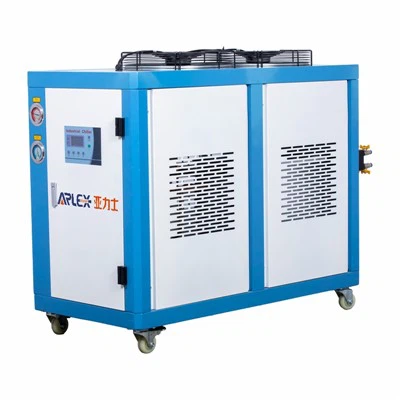
One area that’s often overlooked but is non-negotiable for high speed operation is the cooling and temperature control system. Mold temperature consistency is 70% responsible for part dimensional accuracy in high volume runs. We start by checking the chiller’s capacity: if a machine is rated for 50 tons of cooling, we test it at maximum load with a heated water bath to confirm it can maintain a ±0.5°C temperature setpoint. Then we inspect the mold circuit connections—we use a flow meter to check that each line has the exact flow rate specified for your mold, because a clogged or under-flowing line will cause hot spots, warped parts, and cycle time delays. We also test the machine’s own barrel temperature control: we set the barrel to process temperature, and we take readings at five different points along the barrel every 30 seconds for an hour to confirm no point varies more than 1°C. Even a 2°C hot spot near the nozzle can cause resin degradation over a long production run.
Electrical safety and control system reliability is another non-negotiable set of inspection items. For a machine that’s moving parts at high speed, safety can’t be an afterthought. We start with a full safety audit: we test all door interlocks, light curtains, and emergency stop (E-stop) functions. The E-stop should cut all power to the machine’s actuators in less than 0.1 seconds, and we test it 10 times in a row to make sure there’s no lag. We also check the machine’s electrical cabinet for proper grounding, wire routing, and overcurrent protection—loose wires or inadequate grounding are the number one cause of unplanned HIMM breakdowns. Beyond safety, we inspect the controller’s user interface (UI) and connectivity. A modern HIMM should have a touchscreen UI that’s responsive even after 12 hours of continuous use, and it should be able to integrate with your factory’s MES (manufacturing execution system) to send cycle time data, part counts, and error alerts. We test this integration by simulating an MES signal to confirm the machine sends and receives data without dropped packets. We also check the machine’s error logging: it should log every fault, from a minor pressure spike to a major servo motor failure, with a timestamp and specific error code so your maintenance team can troubleshoot in minutes, not hours.
Once all the core systems are tested, we run a full production simulation with your mold (or a standard test mold if your mold isn’t ready yet) to confirm the machine performs as intended. This is the final, and most important, inspection step. We run a 10,000-shot production run, testing for cycle time consistency, part dimensional accuracy, and defect rates. For example, if you’re making tiny medical connectors that require 0.01mm tolerance, we take 200 part measurements throughout the run to confirm that 99.9% of parts are within spec. We also test for material waste: a good HIMM should have a shot weight waste of less than 1% per run, so no excess resin is melted and discarded. We also check the machine’s ease of maintenance: we simulate a mold change, a nozzle cleaning, and a servo filter replacement to make sure these tasks take the time we promised during the sales process. Nobody wants a machine that takes four hours to change a mold when you’re running a tight production schedule.
After all these tests, we document every single result, creating a detailed inspection report that you can keep for your maintenance team. This report includes alignment measurements, pressure test results, temperature consistency data, error logs from the production simulation, and any adjustments we made during the inspection. We don’t leave until you’re satisfied that the machine works as advertised.
At the end of the day, a high speed injection molding machine is a big investment—often six figures or more—and downtime can cost you thousands of dollars an hour. That’s why we don’t cut corners on inspection. Every machine we leave our facility has passed every one of these tests, because we know that when you turn on that machine in your plant, it needs to work.
Plastic Mixer If you’re shopping for a new high speed injection molding machine and want to make sure you’re getting one that’s tested, reliable, and built for your production needs, we can help. Our team of service and application engineers will walk you through the inspection process, answer any questions you have about our machines, and work with you to find the right model for your part requirements.
- Rosato, D. V., Rosato, M. G., & Rosato, D. V. (2007). Injection Molding Handbook. Springer.
- International Organization for Standardization. (2018). ISO 29901:2018 – Plastics Injection Molding Machines – Performance Characteristics and Test Conditions. ISO.
- Groover, M. P. (2020). Fundamentals of Modern Manufacturing: Materials, Processes, and Systems. Wiley.
Ningbo Yalishi (Arlex) Plastic Machinery Co., Ltd.
Address: No.63, Huangsu East Road, Industrial Zone, Dongqian Lake Tourist Resort, Ningbo, Zhejiang Province
E-mail: leo@arlex.cn
WebSite: https://www.arleximm.com/
