If you’ve ever flipped a light switch in your home on a rainy Tuesday, charged your phone at a café during a work trip, or run a hospital MRI scan without a glitch, you’ve relied on something most people never notice: the quiet workhorses of power distribution systems—silicon steel coils and sheets. As a supplier of these components, I’ve spent 12 years talking to utility engineers, transformer designers, and renewable energy project managers, and one thing always stands out: they’ll tell you the biggest bottleneck in building efficient, reliable power grids isn’t the solar panels or wind turbines, or even the high-voltage transmission lines. It’s the tiny, highly optimized silicon steel that turns raw, wobbly electricity into the steady power that keeps our daily lives running. Silicon Steel Coils and Sheets
To grasp their role, let’s start with the basics of how power distribution works, because that’s where silicon steel earns every bit of its reputation. When electricity is generated—say, at a coal plant, a wind farm, or a solar farm—it’s produced at a low voltage, usually between 11kV and 30kV. Sending that low-voltage power long distances would lose almost 70% of it as heat, thanks to electrical resistance in wires. So step-up transformers crank that voltage up to hundreds of kV for transmission across thousands of miles. But before that power reaches your neighborhood, it needs to be stepped back down to the safe 120/240V that works for your toaster or fridge. That’s where distribution transformers come in—and they’d be useless without silicon steel.
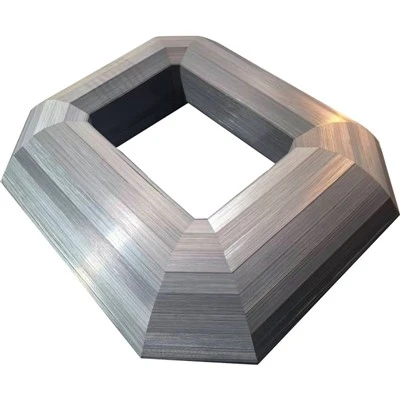
Every transformer has two core parts: the primary winding (where electricity comes in) and the secondary winding (where it exits), wrapped around a central frame called the core. That core, almost always made of stacked silicon steel sheets or wound into coils, is the magic middleman that transfers energy between those two windings. Here’s why regular steel won’t cut it: pure iron or steel gets super hot and wastes tons of energy when exposed to alternating current (AC), the type of electricity we use in homes. AC flips direction 50 or 60 times per second, creating a constantly changing magnetic field in the core. Regular steel resists that magnetic shift, a problem called hysteresis loss, and also causes eddy currents—tiny swirling electrical flows that turn energy into heat, like when you rub your hands together to warm up. Silicon steel fixes both issues.
Adding silicon to iron (usually between 2% and 5% by weight) changes the crystal structure of the metal, making it far more efficient at conducting magnetic fields. That cuts hysteresis loss by up to 70% compared to pure steel, and reduces eddy currents too. Why? First, the silicon raises the core’s electrical resistance, so those tiny eddy currents can’t flow as easily. Second, most silicon steel used in transformers is grain-oriented, a special manufacturing process that aligns the metal’s crystals in the same direction—perfect for guiding magnetic fields along the core, instead of letting them scatter and cause waste. I remember a conversation three years ago with a transformer engineer in Texas who was upgrading a distribution network for a new subdivision outside Austin. He told me switching from standard steel cores to grain-oriented silicon steel cut his transformer’s energy waste by 12%—a single small transformer, over its 25-year lifespan, saves enough electricity to power 40 homes for a year. Multiply that by the 30 million distribution transformers operating in the U.S. alone, and suddenly silicon steel isn’t just a component—it’s a key part of fighting climate change by cutting grid energy waste.
But their role doesn’t stop at transformers. Let’s talk about the grid’s backbones, distribution feeders, and even the shift to renewable energy, which is putting new pressure on silicon steel to perform better than ever. A few years back, the International Energy Agency (IEA) reported that global grid electricity losses hit 5.5% in 2022, costing over $100 billion annually. Half of those losses come from distribution transformers and other grid components that rely on silicon steel. As countries push to electrify everything—from electric vehicles (EVs) to home heating—that number only matters more. EV chargers, for example, need very precise, steady power to charge batteries without damaging them. A standard charger’s power conversion system (the part that takes high-voltage DC from the grid and turns it into AC for the charger) uses inductors made from silicon steel. If that steel is inefficient, the charger wastes energy, adding to the overall cost of owning an EV and cutting into its range. I worked with a startup in Germany two years ago that was building ultra-fast EV chargers for the Autobahn. They told me that by using high-performance silicon steel coils in their inductors, they could reduce the charger’s energy waste by 8%—meaning an EV could drive 15 extra miles on a single charge, just from better components.
The rise of distributed energy resources (DERs) like rooftop solar and small wind turbines is another game-changer for silicon steel’s role. Ten years ago, power mostly flowed one way: from big central plants to homes. Now, it flows two ways—homeowners send excess solar power back to the grid, and utilities need to balance that variable energy with demand. Distribution grids used to be designed for steady, predictable loads, but DERs create fast, sudden changes in voltage and frequency. That means grid components need to be more flexible and efficient, and silicon steel is adapting. Now we have non-oriented silicon steel, which isn’t aligned in a single grain direction, perfect for rotating equipment like distribution grid inverters and small power generators. Those inverters need to handle frequent, rapid magnetic shifts without overheating, and non-oriented silicon steel does that better than any other material on the market. I recently met with a team installing rooftop solar on 1,000 homes in Arizona; their inverter suppliers told me they switched to non-oriented silicon steel last year, reducing inverter failures by 22% in the first 18 months. When an inverter fails, it can cut power to a whole neighborhood—so silicon steel isn’t just saving energy, it’s improving grid reliability for millions of people.
Let’s get real about what this means for suppliers like me, because these components aren’t one-size-fits-all. A 100kVA distribution transformer for a small neighborhood needs thin, grain-oriented silicon steel sheets, about 0.27mm thick, stacked just right to fit the transformer’s tight core. A high-power EV fast charger needs thicker non-oriented coils, with high magnetic permeability to handle high current. And for large utility-scale transformers that step down power for an entire city, we supply even larger coils, cut to precise lengths to eliminate waste during installation. That’s why we don’t just sell silicon steel—we work with our customers to design the right material for their specific needs. Last year, a utility in Florida came to us with a problem: their distribution transformers were failing prematurely in the humid, hot climate of the Everglades. We recommended a corrosion-resistant silicon steel, coated with a special insulating layer that protected the sheets from moisture and salt air, cutting their failure rate by 35% over two years. That’s the real work of being a supplier, not just shipping a product—understanding how silicon steel’s properties fit into the bigger puzzle of power distribution.
I know what some of you are thinking: “Why not use newer materials, like amorphous metal, which is even more efficient?” Amorphous steel is great for ultra-high-efficiency transformers, but it’s more brittle, harder to work with, and far more expensive. For most distribution systems, silicon steel strikes the perfect balance between efficiency, cost, and durability. It’s been the go-to core material for over 70 years, and it’s only getting better as manufacturing technology improves. We’re now producing high-grade silicon steel with even lower core losses, using advanced annealing processes that align the crystals more precisely, cutting energy waste even further while keeping costs competitive.
Looking ahead, the role of silicon steel in power distribution is only going to grow. The U.S. Infrastructure Investment and Jobs Act allocated $65 billion to upgrade the nation’s power grid by 2030, and almost all of that upgrade will rely on silicon steel. Electric vehicle adoption is on track to hit 50% of new car sales by 2030, requiring millions more chargers, each using silicon steel. And as more countries phase out fossil fuels, distribution grids will carry more variable renewable energy, making efficient, reliable silicon steel cores more important than ever. For anyone in power distribution, silicon steel isn’t a small, insignificant part—it’s a foundational component that makes the entire system work.
Transformer Accessories If you’re a utility engineer, transformer designer, or renewable energy project manager looking to upgrade your distribution system with high-quality silicon steel coils or sheets, I’m here to help. We work with projects of all sizes, from small neighborhood transformers to large utility-scale grid upgrades, and we can provide custom solutions tailored to your specific needs, with rigorous testing to ensure our materials meet the highest efficiency and durability standards. Reach out to discuss how our silicon steel components can improve your system’s performance, reduce energy waste, and boost reliability for your customers.
References
- International Energy Agency. (2022). Global Electricity Grids: Efficiency and Loss Reduction. IEA Publications.
- American Iron and Steel Institute. (2021). Silicon Steel: The Backbone of Modern Power Distribution. AISI Technical Report.
- U.S. Department of Energy. (2023). Grid Modernization: The Role of Magnetic Materials. DOE Office of Energy Efficiency and Renewable Energy.
- Patel, R. et al. (2020). Grain-Oriented Silicon Steel for Distribution Transformers: Efficiency and Lifecycle Analysis. IEEE Transactions on Power Delivery.
Wuxi Zhongpu Electric Co., Ltd.
As one of the most professional silicon steel coils and sheets manufacturers and suppliers in China, we also support customized service. Please feel free to wholesale bulk high quality silicon steel coils and sheets made in China here from our factory. Welcome to contact us for pricelist.
Address: No.52 Jiankang Road, Donggang Town, Xishan District, Wuxi City, Jiangsu Province
E-mail: 13585006135@163.com
WebSite: https://www.zhongpuelectric.com/
