Hey everyone, I’m Jake, and for the last 12 years, I’ve been running a Special Purpose Machinery (SPM) shop—we build custom, one-off and low-run machines that solve problems off-the-shelf gear can’t. Lately, though, more 3D printing startups, part manufacturers, and even small aerospace shops have been hitting us up, not just for our usual industrial automation stuff, but for 3D printing-specific SPM builds. That’s when it hit me: most people only talk about 3D printers themselves, but the real magic to scaling 3D printing from prototype-only to full production is the custom machinery that works with those printers, not instead of them. Let’s break down the actual, day-to-day applications we’ve built for clients lately, no fancy jargon, just real use cases. Special Purpose Machinery
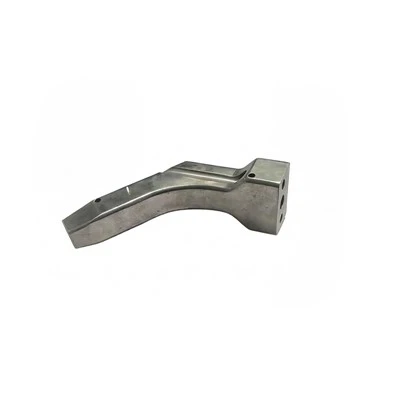
First off, let’s get one thing straight: I see a lot of folks mixing up general automation with SPM for 3D printing. Off-the-shelf conveyors work for moving plastic parts around a assembly line, but if you need a machine that can take a 3D printed ceramic turbine blade fresh off a binder jet printer, blow off excess powder without scratching the thin airfoil and sort good parts from a slightly warped batch in 2 seconds flat? That’s SPM territory—no generic system can do that without sacrificing speed or part quality.
One of our biggest clients right now is a medical device maker that does 3D printed titanium orthopedic implants. For the longest time, they were hand-sanding those implants post-print to get rid of the support structures and rough layer lines. It cost them 20 bucks per part in labor, and 15% of parts got messed up from human error. We built them a custom SPM station that’s integrated directly to their metal 3D printers: when a print run finishes, the machine pulls the build plate, vibrates it gently to knock off loose titanium powder, then uses a pneumatic, contour-specific sander that follows the exact shape of each implant, automated by a 3D scan of the part. No more hand sanding, part defect rate dropped to 2%, and they now run three shifts unattended—something they never could do with manual work. That’s not a small upgrade; that’s the difference between making 100 implants a week and 1,000.
Next up, post-processing is the biggest pain point for most 3D printing production, and SPM is where we’ve made the most headway here. Another client does high-volume FDM parts for consumer electronics—phone mounts, keyboard components, that kind of stuff. FDM parts are cheap to print, but they look matte and a little rough, so they need a gloss finish to go into retail packaging. Off-the-shelf tumblers work for bulk small parts, but their print runs are inconsistent: sometimes they have a batch of 5,000 parts, sometimes 20, and generic tumblers waste material and break parts when runs are small. We built them a modular SPM system that swaps out tooling in 10 minutes flat, so one day it’s running gloss finishing for a 5,000-part phone mount run, the next it’s doing a 200-part custom keyboard prototype. We also added a feed hopper that only loads 1 part every 2 seconds, so no jams, and a dust extraction system that’s 90% more efficient than their old generic setup. They told us that cut post-processing time by 75% and saved them $40k a year in consumables.
Wait, I should also mention powder handling—this is non-negotiable for powder bed fusion (PBF) 3D printing, which is used for metal and ceramic parts. No one talks about this enough, but bad powder management will kill a print run faster than a bad design. For our aerospace client, they were using standard powder sieves that took 2 hours per batch, and they’d get 5-10% of batches contaminated with leftover metal shavings that ruined parts. We built a closed-loop powder processing SPM system that’s integrated to their PBF printers: it pulls unused powder from the printer’s powder chamber, sieves it, checks for contaminants via a tiny laser sensor, and sends good powder back to the printer’s feed chamber—all without exposing the powder to air (which is critical for reactive metals like aluminum or titanium). It also has a waste stream that automatically discards any bad powder, so no manual sorting. They went from 2 hour per batch processing to 15 minutes, and their print yield went up 22% because less bad powder was going into builds. That’s the kind of custom, integrated solution that off-the-shelf automation can’t touch because every printer’s powder chamber is a little different.
Another big one: inspection and quality control. 3D printed parts have layer lines, internal voids, and support marks that are easy to miss with human eyes, especially at scale. We built a vision-based SPM system for a automotive client that does 3D printed engine brackets. The machine is linked directly to their 3D printer’s data file, so it knows exactly what each part should look like, then uses a 3D camera to scan parts right off the build plate. It catches things like a misprinted hole, a tiny void inside the part, or a support leftover that would have failed a stress test later. We added a sorting arm that kicks bad parts off the line and sends good ones straight to the next assembly step. Before this, their QC team was checking 10% of parts manually, and they missed 8% of defects. Now they check 100% of parts automatically, and defect escapes dropped to less than 1%. That’s the kind of consistency that production 3D printing needs to work—you can’t scale if you’re missing defects.
Wait, let’s not forget about in-line setup and changeover, which is a huge one for mixed production. A lot of manufacturers are moving to “mass customization” with 3D printing—making 10,000 unique parts, each slightly different, instead of 10,000 identical ones. Off-the-shelf automation is built for identical parts, so changing over from one part to another takes hours. We built an SPM cell for a medical client that makes custom hearing aids, which are 3D printed in all different sizes. The cell includes a part loader that reads the digital file for each hearing aid, adjusts the sander and inspection tools automatically, and processes each part in 45 seconds. Changing over to a new size takes less than a minute—no programming, no manual tool swaps. That’s the key to making mass customization affordable; you don’t want to spend half your shift just switching the machine from one job to another.
I’ve heard a lot of people say, “Why not just modify the 3D printer itself?” And sure, you can tweak a printer’s software to add post-processing steps, but that’s limited. SPM adds hardware that’s tailored to your specific workflow, your specific parts, your specific production volume. For example, if you’re a startup making 3D printed drone parts, you don’t need a $1 million custom machine, but you also don’t want to waste 2 weeks hand-finishing each part. A smaller SPM station can be built for $15-20k, which pays for itself in 3-4 months from labor savings.
Now, here’s the thing that a lot of SPM providers won’t tell you: most of the best applications come from working with the 3D printers, not against them. A lot of our clients come to us after they’ve bought 10-15 3D printers, and they’re stuck because they can’t figure out how to connect them to the rest of their factory floor. That’s where we step in—we don’t just build machines; we integrate them into their existing workflow, make sure they talk to their ERP system, their QC tools, everything.

If you’re someone who’s scaling 3D printing for production, whether it’s metal parts for aerospace, plastic parts for consumer goods, medical implants, or anything in between, you don’t have to figure this out alone. We’ve built SPM for all kinds of 3D printing technologies, from FDM to binder jet to PBF, and we tailor every build to your exact needs—no one-size-fits-all nonsense. If you’re tired of post-processing bottlenecks, low yield from bad powder, inconsistent QC, or long changeover times, reach out to us to talk through your specific pain points.
CNC Turning Parts References
- Gibson, I., Rosen, D., & Stucker, B. (2021). Additive Manufacturing Technologies: 3D Printing, Rapid Prototyping, and Direct Digital Manufacturing. Springer.
- ASTM International. (2022). Standard Guide for Post-Processing Additively Manufactured Parts. ASTM F2924-22.
- Wohlers Associates. (2023). Wohlers Report 2023: Additive Manufacturing and 3D Printing State of the Industry. Wohlers Associates Inc.
- Mellor, S., Hao, L., & Zhang, D. (2014). Additive manufacturing: A framework for implementation. International Journal of Production Economics, 149, 194-201.
Suzhou Huaquan Electromechanical Manufacturing Co., Ltd.
As one of the leading special purpose machinery manufacturers in China, we warmly welcome you to buy bulk customized special purpose machinery made in China here from our factory. If you have any enquiry about pricelist and free sample, please feel free to email us.
Address: No.7550 Mudong Road, Hengjing Town, Wuzhong District, Suzhou City, Jiangsu Province, China
E-mail: Huaquan2005@outlook.com
WebSite: https://www.huaquancnc.com/
